Saturday, November 07, 2009

The Block Center


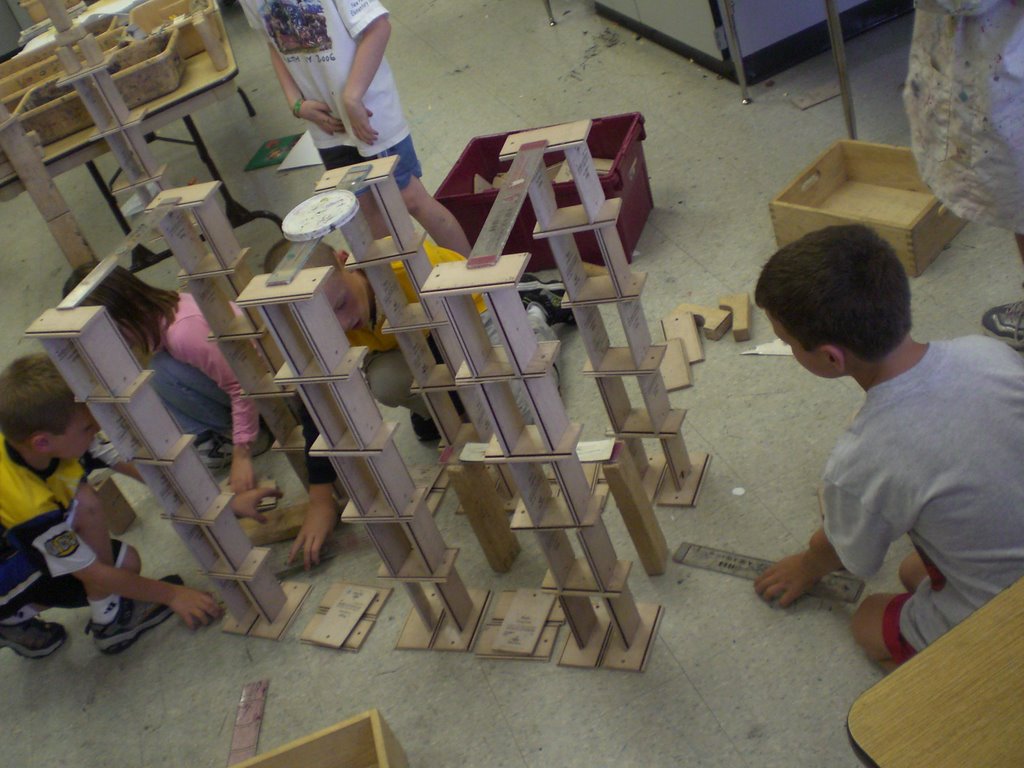
Our children love to work in the block center. It is a place where mysterious, adventure filled environments can be created. The block center is always busy where construction crews and designers engage in creating cities of the future and recreate battle scenes from recent history and the distant future. There is always a story to be told here, problems to be formed and solved. The block center is one of our most important centers in the NPE Art Room.

Saturday, October 17, 2009

Wednesday, April 01, 2009

IU South Bend Conference

We had a fantastic conference at IUSB! My sincerest thanks goes to Norman and Dr. Micheline Nilsen for inviting me to participate in this wonderful event!
Dr. Marvin Bartel delivered one of the most important keynotes I have ever listened to: "Learning and Assessing Imagination as Intelligence." The gold nugget of his presentation? "Children are the designers and engineers of the adults they will become." Translation? The kinds of early childhood learning experiences available to children are so important. Using and refining one's imaginative capabilities during the developmental years is so important for intellectual growth. Creative and divergent thinking capacities are refined during this critical phase.
I am so happy I am a choice based art teacher (Thanks Clark, Kathy, Diane and John!). I would not want to be anywhere else right now.
In the picture above, Miriam Marcus, a choice based art teacher who teaches at an urban high school in Flint, Michigan (pictured third from the left), shared with me the challenges and joys of employing choice pedagogy with her students. One of the stories she shared with me about students she taught knitting and crocheting was amazing. Her students create all kinds of hats, blankets and other clothing articles and accessories with wooden sticks and dowl rods.....those kids are working on their art all the time and it means a great deal to them to be able to use their new found knitting and crocheting skills. Students are creating art from a truly personal context. I was truly humbled after talking with her.
I was also able to meet other art teachers from Indiana, Michigan and N.Y.! Many folks were very interested in the choice approach after our presentions. I was more than happy to spread the gospel. What a great conference.

Friday, February 13, 2009

IUSB Art Education Conference Info


Visual Arts in Education Conference Friday, March 27, 2009
sponsored by the Ernestine M. Raclin School of the Arts, Indiana University South Bend
Abstract: This conference invites art educators and classroom teachers to a professional
day including presentations, roundtable discussions and studio activities. It engages the "issues
of the day" regarding assessment, qualitative learning, art across the curriculum and making the
arts inclusive.

Program
8:45- Meet and greet - coffee
9:00- 11:45 morning session in Northside- Recital Hall
Welcome: Marvin Curtis, Dean of the Ernestine M. Raclin School of the Arts

Presentations:
Learning and Assessing Imagination as Intelligence
Marvin Bartel, Ed.D, Art Education, Emeritus Professor of Art, Goshen College
Art and the Mental Processes

Mary Beth Di Gann, Art specialist, Perley Art Academy, South Bend Community School Corporation, Teacher of the year, 2000.

An Introduction to Choice-Based Art Education
Clyde Gaw, Art teacher, New Palestine Elementary School, Indianapolis
Art Education Association of Indiana- Chair Arts Advocacy Committee

Round Table discussions with presenters.

12:00 Lunch (provided for teachers)

1:00-3:30 Afternoon session in Fine Arts studios

Studios:activities and demonstrations to “take-to-the-classroom”
Nyame O. Brown, artist and University of Notre Dame faculty
Bruna Wynn, artist, designer and art teacher at Clay H.S. South Bend
Alan Larkin, artist and IU South Bend faculty, printmaking
Ron Monsma, artist and IU South Bend faculty, pastel drawing

Digital image workshop:
Downloading visual image resources (bring USB drive)

Registration: Teachers and educators may register by e-mail. nnilsen@iusb.edu
A certificate of attendance will be provided to teachers.

Contact: mnilsen@iusb.edu
Micheline Nilsen, Ph.D., Visual Arts Coordinator, Assistant Professor of Art History
Ernestine M. Raclin School of the Arts, Indiana University South Bend, 1700 Mishawaka Avenue, South Bend, IN 46634-7111

This conference is free and open to the public.

Visual Arts in Education Conference Friday, March 27, 2009
sponsored by the Ernestine M. Raclin School of the Arts, Indiana University South Bend

About the presentations:

Learning and Assessing Imagination as Intelligence

Marvin Bartel, Ed.D, Art Education, Emeritus Professor of Art, Goshen College
Art learning is a complex multifaceted endeavor that Prof. Bartel calls “Flying Lessons.” He compares common art learning and assessment methods in terms of power to inspire, to influence a student’s thinking habits, and to develop an imaginative mind. He presents the strategies for critiques, grading and teaching achieved in a “studio classroom culture.” How do students become prepared and informed; how do they become inspired to imagine, to materialize, to elaborate, and to refine authentic and evocative artwork?

Art and the Mental Processes

Mary Beth Di Gann, Art specialist, Perley Art Academy, South Bend Community School Corporation, Teacher of the year, 2000
What is the current research relating to the benefits of visual arts for students and integrating teaching visual arts throughout the curriculum? In her presentation, both informational and experiential, Mary Beth Di Gann shares her experiences as a teacher at a “magnet” school of the arts, a founder and director of Community Kids Network (an after-school program featuring the arts) and a curriculum developer

An Introduction to Choice-Based Art Education

Clyde Gaw, Art teacher, New Palestine Elementary School, Indianapolis, IN, Art Education Association of Indiana- Chair of Arts Advocacy Committee, interdisciplinary curriculum implementer Choice-Based Art Education fosters imaginative and creative growth by motivating children through the method of teaching for artistic behavior. Choice teachers frequently integrate language arts, technology and other subject areas within this teaching method. Clyde Gaw writes “Nothing in education is more powerful than authentic, student-directed, student-centered learning experiences constructed from the bottom up.” He presents how this innovative “art education concept allows students opportunities to take
ownership of their art experiences from conception to completion with teacher acting as classroom manager, environmental designer, art expert, facilitator, and student mentor.”

Studios - hands-on activities and demonstrations to take to the classroom
Nyame O. Brown, artist and University of Notre Dame faculty and Bruna Wynn, artist, designer and art teacher at Clay H.S. South Bend Community School Corporation
Together Nyame Brown and Bruna Wynn conduct a workshop related to their teaching experiences with community based art programs in the city of Chicago. They will show student artwork and demonstrate some contemporary methods of “non-press” printmaking.
Alan Larkin, artist and IU South Bend faculty, printmaking
Ron Monsma, artist and IU South Bend faculty, pastel drawing
Digital image workshop: downloading visual image resources (bring USB drive)

Monday, January 26, 2009

Dynamic Learning through the Visual Arts


The viability of art education programs are entering a critical phase in many school districts across Indiana and the United States. As state revenues decline and school budgets, presently cut to the bone, shrink even further, many decision makers responsible for shaping curricula may be tempted to marginalize programs vital to creative growth experiences necessary for fully developing the intellectual capacities of our children .

When I think of most of the educational activities in today’s classrooms, I think of student’s intellectual development facilitated primarily by listening, reading and writing linguistic and mathematical forms of symbolic information. Children spend much of their time in school completing paper and pencil selected response work sheets designed to prepare them for high stakes testing events. Learning in most 21st Century classrooms today require children to place a high priority on information processing. Don’t get me wrong, it is the role of our educational institutions to impart knowledge and skills upon our young learners. The problem is this: human beings are hard wired to think and dream with a multitude of sensory information in addition to using their visual imagination. It is hard to promote creative growth and divergent thinking capacity if children are deprived of learning experiences that do not stimulate these areas of the human mind. Creativity will be a critical component to the success of our future citizenry. Higher level thinking skills related to creativity cannot be developed within our children if they are deprived of experiences that promote such forms of learning.

Within our schools, the art room is that unique place where children are allowed to experiment, imagine, create and express personal ideas using a myriad of visual forms, artist materials, techniques and technologies. Much of visual arts education learning requires students to execute the steps to represent and convey ideas in two, three, or four dimensions. This requires individuals to develop the ability to focus their attention on a vast array of quality control details. The assembly of these qualities within an art work requires a synchronization of consciousness with imagination and the sensory, emotive and cognitive realms.

David Ausubel, the influential American cognitive psychologist defined meaningful learning as experiences where learners actively interact and interpret information and are engaged in substantive mental operations with the educational content they are to learn. He could have been describing the artistic process when he made this statement. Art teachers do not boast when claiming visual arts learning experiences can lead to transformational change within their students.

Scientific research by Nobel Laureate, Eric Kandel showed that stimulating sensorial activity boosts long term memory formation in neurological structures by the extra production of the neurotransmitter serotonin. Neural networks are strengthened and expanded when learners are engaged in stimulating, meaningful experience. Scientists and researchers using the latest medical imaging technology report rhizome like bundles of neural pathways interconnected throughout the human brain, illuminate like Christmas tree lights when subjects are engaged in meaningful activity. Likewise, the neural pathways are dimmed when cognitive activity is passive or repetitive.

From an educational perspective, Kandel’s research means regular opportunities for visual arts experiences can lead to increased cognitive capacity and expand learning and memory capability in the human brain. The hands, eyes, ears and body are the agents of cognition. Educational settings and experiences where students are reduced to passive recipients of knowledge produce learning experiences that are inadequate and unsatisfactory to learners. Regular visual arts experiences in our schools matter because without them, educators run the risk of providing a schooling experience that goes into one ear and out the other. Children thrive in school environments when they have access to the fine arts.

A citizenry populated with creative, divergent, imaginative thinkers will be most beneficial to this state’s future prosperity. Ideas and intellectual property dependent upon visual thinkers will become assets in the new economy of the 21st Century. The refinement of the imagination as developed through the visual arts will provide future designers, engineers, scientists, entrepreneurs, innovators, professionals and others with the creative edge they will need to compete in an increasingly competitive and uncertain future. Brainstorming without perceptive, imaginative counterparts becomes an exercise of inconsequential group think.

References
Center on Education Policy. (2007). Choices, Changes and Challenges: Curriculum and Instruction in the NCLB Era. Retrieved 01/11/09 from: http://www.cep-dc.org/

Driscoll, M.P. (1994) Psychology of Learning for Instruction,
Needham Heights: Allyn & Bacon Publishers

Eisner, E. W. (2002). The Arts and the Creation of Mind. New Haven & London: Yale University Press.

Gajdamaschko, N. (2005) "Vygotsky on Imagination: Why an understanding of the imagination is an important issue for schoolteachers." Teaching Education, 16(1), pp. 13-22.

Gaw, C. (2008) “A Rationale for the prevention of future failures of imagination,” Retrieved 01/14/09 from: www.clydegaw.blogspot.com

Kandel, E. (2006) In Search of Memory: The Emergence of a New Science of Mind. New York, W.W. Norton & Co. Inc.

Greenspan, S., Shanker, H. (2004) The First Idea: How Symbols, Language and Intelligence Evolved from Our First Ancestors. Cambridge, Mass. De Capo Press

Winner, E., Hetland, L. (2007) Art for our sake. NAEA News, 49(6). Reprinted with permission from the Boston Globe.

Friday, October 17, 2008

Art Advocacy


I am inserting a copy of an essay I wrote for the Art Education Association of Indiana and also republished on the Teaching for Artistic Behavior Website ( http://www.teachingforartisticbehavior.org/ ) from 2007. The essay is entitled:
"A Rationale for the Prevention of Future Failures of Imagination."


The AEAI recognizes there are many spectacular fine arts programs supported by enthusiastic administrators and highly qualified teachers across the State of Indiana. While a small fraction of students who participate in these programs go on to seek further education in visual arts professions, it is important to remind the general public that one of the most important benefits of a quality visual arts education is the development of an array of thinking skills, related to the expansion of the imagination. The visual arts, more than any other subject within the school curricula, focus on the exploration and study of the image. Let us not forget the human mind represents ideas and dreams through images. The development and growth of one’s ability to express ideas with forms and images is the heart of the art education experience.

An examination of the activities taking place within the art room reveal learning distinctive from other kinds occurring in regular classrooms. Where much of the educational activity in today’s schools consists of text-oriented seat work based on extended and selected response assessments, the art room is that unique place where individuals are encouraged to experiment and create with personal ideas using a myriad of artist materials and techniques.


Eight-year-old Greg has an idea for a drawing. In an earlier lesson, Greg’s art teacher examined the expressive use of elements in the paintings of Van Gogh. This presentation has inspired Greg to incorporate many of these same elements of design into his own art. He begins by outlining the shape of a giant S vertically onto the center of his paper. U-shaped scale textures are rendered onto the surface of a giant dragon. Landscape elements are incorporated into the picture. Greg continues adding more details in order to animate his art. Working on a large sheet of paper, Greg knows his drawing will require a lot of work. He enlists the help of his curious friends Jason, Edward and Frank. The four boys discuss which areas of the drawing need further development and work cooperatively over the next several class sessions. Greg suggests they might render parts of the drawing with sophisticated drawing techniques learned in previous lessons. They agree to use crayon resist and crayon etching to enhance the drawing’s surface. Each day in class, the boys reflect and evaluate the progress of the work before making new changes.

The activities that unfold in the art room provide opportunities for children to practice conveying ideas into physical form. Greg’s example reveals the exploration of a complex story concept and its manifestation from idea to visual representation. Executing the steps to realize an idea and representing it in two, three, or four dimensions requires individual attention to a vast array of quality control details. The assembly of these qualities within an art work requires a synchronization of consciousness with imagination and the sensory, emotive and cognitive realms.
School boards and administrators, who control the curricular offerings of their local school districts, must be reminded from time to time that students, who participate in art education programs, have increased cognitive advantages over peers who have not had such experiences. Children with visual arts experiences are more skill- ful at attending to detail, observing, innovating, inventing, cooperating, and conceptualizing with visual and mental forms than their counterparts who have little or no practice in the visual arts. We are all born with brains but the mind is cultivated through experience.

Students engaged in comprehensive art education learning experiences have greater opportunity to become masters of their imagination. This is a bold claim, one that art educators do not make lightly. We facilitate the expansion of our student’s imagination on a daily basis. Whether we are studying the artistic creations of artists or cultures, exercising children’s capacity to express forms or ideas based on imaginative thought, sharpening our skills at observing and visual perception, the refinement of imagination is one of the key areas of development in a quality art education program.

Sadly, the AEAI has received a growing number of reports regarding the marginalization of visual arts programs in school districts across the state. Ex- act numbers are hard to tabulate because curricular deficiencies are something school districts do not like to publicize. During the next year, AEAI will begin to gather more substantial data and critically analyze this situation. A 2007 report from the Center on Education Policy indicates 44% of 349 schools surveyed from across the U.S. cut instructional time in one or more subjects at the elementary level in art, music, social studies, civics, and physical education since 2002. Currently, the Indiana State recommendations for student learning in the visual arts are approximately 60 minutes per week for elementary children and ninety minutes per week for middle school students. (These recommendations will soon be retracted by the state DOE.) High school graduation requirements for an academic honors diploma require at least two elective courses in the fine arts.

We know that learning is time-sensitive. When a student who is interested in the visual arts is denied course offerings because of program elimination or rule changes that deny opportunity, a student’s ability to fully realize their potential will have been short-changed. It is hard to imagine what might have occurred in the Renaissance if the 15th Century’s most important art teacher, Verrocchio, had not influenced and facilitated the development of Leonardo da Vinci.

A citizenry populated with creative, divergent, imaginative thinkers will be most beneficial to this state’s future prosperity. Ideas and intellectual property dependent upon visual thinkers will become assets in the new economy of the 21st Century. The refinement of the imagination as developed through the visual arts will provide future designers, engineers, scientists, entrepreneurs, innovators, professionals and others with the creative edge they will need to compete in an increasingly competitive and uncertain future. Brainstorming without perceptive, imaginative counterparts becomes an exercise of inconsequential group think.

If the education that shapes our children’s thinking ability fails to engage the visual imagination at a psychologically meaningful level, the well-rounded education U.S. Secretary of Education Margaret Spellings believes "all children deserve" will have been skewed. The power to control curricular offerings within schools lies with elected school boards and the administrators who advise them. Teachers and parents must stand firm as a bulwark against possible arts education program cuts. Full consideration for the development of imagination in our future citizenry will be of critical importance if we are to face the challenges and solve the problems of the 21st Century.

References
Caouette, R. (2006, Fall)Embracing the creative and conceptual age. Reston, VA: NAEA Advisory.

Carp, R.M. (2004). Art education and the Sign(ification) of the Self. Semiotics and Visual Culture: Sights , Signs and Significance. Reston, VA: National Art Education Association.

Eisner, E. W. (2002). The Arts and the Creation of Mind. New Haven & London: Yale University Press.

Gajdamaschko, N. (2005) "Vygotsky on Imagination: Why an understanding of the imagination is an important issue for schoolteachers." Teaching Education, 16(1), pp. 13-22.

Center on Education Policy. (2007). Choices, Changes and Challenges: Curriculum and Instruction in the NCLB Era. Retrieved 01/11/09 from: http://www.cep-dc.org/

U.S. Dept. of Ed., Teachers ask the Secretary, Retrieved 01/07/09 from: http://www.ed.gov/teachers/how/reform/teachersask/index.html#arts.

Winner, E., Hetland, L. (2007) Art for our sake. NAEA News, 49(6). Reprinted with permission from the Boston Globe.

Monday, March 17, 2008

Spring Art Show at Sugar Creek


Welcome to the New Palestine Elementary 2008 Spring Art Show Exhibit at Sugar Creek Elementary.

You will notice, each art work is different from the other.
This is the hallmark of a choice based art exhibit.

You won't find"school art" here. Only the authentic stuff....

Individuals conveying their ideas, creating their art.

Saturday, June 23, 2007

Theodore Potter Elementary Art Camp!

Wow! What a great experience! My sincerest 'thank you' goes out to Mr. Tim Clevenger of IPS School 74 for allowing us the opportunity to conduct Theodore Potter Elementary Art Camp!

We had a special guest on Wednesday of our camp. Mrs. Swinney the regular art teacher of TPES made a special visit to camp and spent time with our students.

We had several centers open: drawing, painting, architecture/blocks, puppet theatres, construction/invention, art library, computers, yarn and paper mache. We had many memorable moments during camp including the building of a city inside the Great Wall of China, a major puppet play by the TPE Art Camp Puppeteers, and the building and breaking of a huge fish pinata! Enjoy the pics......

Thursday, June 07, 2007

Shadow and Stick Puppets


Shadow and stick puppets are one of our younger students favorite activities. Here is a link to a movie of how we begin some of our stick puppets. Enjoy!

Theodore Potter Elementary Art Camp


We have made a change in the dates of the art camp. We will run the camp during the week of June 18-22. We have at the time of this blog post approximately 24 participants signed up for the camp. My most sincere appreciation goes to Mr. Tim Clevenger, Principal of School 74 for making everything happen. Remember, Theodore Potter Elementary students recieve scholarships and their families will incure no costs to attend camp. I will see everyone on the morning of June 18 at 9:00 AM. See you then! Clyde

Wednesday, May 30, 2007

Theodore Potter Art Camp: June 11 - 22


We are doing a choice based art camp at School #74, Theodore Potter Elementary. This is where I got my start as an art teacher back in 1984. Because of this special connection to IPS, all Theodore Potter Elementary students are recieving scholarships to attend the camp. I can't wait to begin working with the kids from Woodruff Place and surrounding neighborhoods. This art experience will be fantastic! There is contact information on the jpeg. Just click it to enlarge. More to come later! Best wishes.....Clyde

Wednesday, November 08, 2006

Spotlight on 2nd Grade

Here are a few images from my hard charging 2nd graders. Everyone at this grade level demands their weekly visits to the art room where they live life on the creative edge. Enjoy the pics!


2nd Grader creates a mono-print. Posted by Picasa

2nd Grader's Invention Posted by Picasa

The City


2nd Grade students construct a city at the block center.

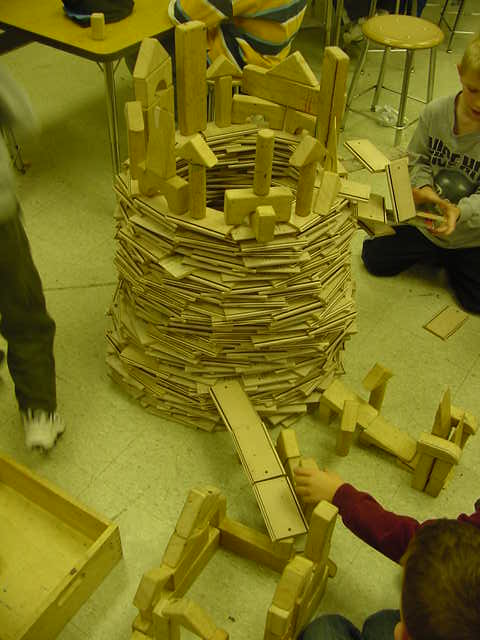
The Castle


2nd grade boys construct a "castle" with wooden blocks.

Thursday, October 26, 2006


Note the artists at the bottom of the Art Education Association of Indiana conference catalogue cover. They are all students from a choice based classroom. Posted by Picasa

Sunday, May 07, 2006


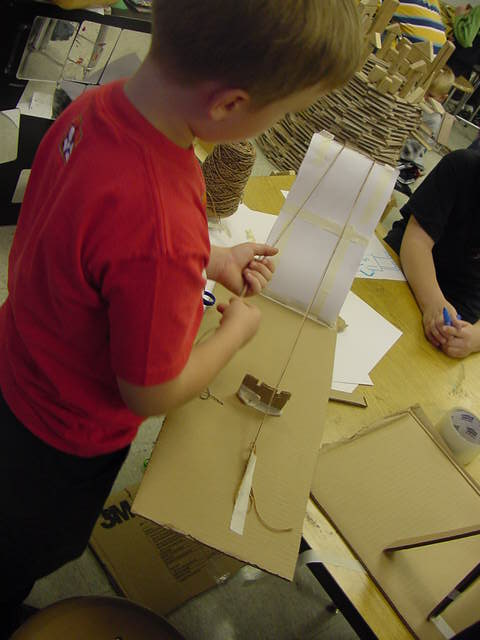
Cardboard sculpture creations by 2nd Graders. Posted by Picasa

What Happens Inside My Classroom?

My colleague Judy Decker, webmaster of the Incredible Art Department asked me how I might describe the choice based curriculum in my program to a prospective employer if I were to interview for a position as an elementary art teacher, so I wrote this response which she was able to post on the Getty's "Artteacherexchange" list serve:

Curriculum as we know it are the activities one employs for whatever it is you expect your students to learn. For the choice based art teacher, learning to think like an artist is our goal here and there are two curriculums going on simultaneously. One is the teacher centered curriculum, one in which a series of lessons or activities that tie into state standards or essential learning. The other is the student-centered curriculum, which can be negotiated between student and teacher or facilitated by the teacher for the student. In between these two curricula is a third unwritten curriculum, the one in which experimentation is afforded, risks are taken, discoveries are made and newfound knowledge segues into deep, profound personally meaningful learning experiences. When curriculum activities are centrally prescribed, planned sequentially and outcomes already determined, surprise and discovery are marginalized. The main thing that attracted me to choice was the amount of diversity within this three-pronged approach to curriculum. There is a dynamic within the art curriculum now that I never had before. The kids know it, I know it and everyone else knows it. This is why the art room experience today is more important to the kids than it ever was before. More to come later...thanks again...Clyde


I did see this question earlier, and didn't have time to respond. So here is another response. I think the applicants would do themselves well, if they could describe how “curriculum” would look, as it might be employed inside of an actual class. So let’s take the "painting curriculum" for example as it might apply to a choice art program. Again, I am expecting to have three forms of curriculum going on simultaneously for this subject area and I am describing what goes on in the choice art room for this interviewer. (Actually, today, there are usually committees doing the interviewing so let's imagine I am in the "hot seat" and I am speaking to a group of distinguished parents and educators) "After describing to the group the way curriculum might work in a choice art room, I would give them a description of a class with a lesson from the painting curriculum and would describe my room, complete with all of my “art centers.” Then begin my narrative;

“After students enter the art room, I invite them to the demonstration table for the daily lesson. I have 29 2nd graders. I know their attention span is only about a minute or two, so I have to be good and fast with this demo. I have a copy of the "Starry Night" in front of me at my table. “Boys and girls, this is the 'Starry Night' by Vincent Van Gogh! Notice how Van Gogh was inspired to paint the night sky! With swirls of color and movement! ‘Why the sky looks ALIVE!’ Look at the combination of lines colors and brush strokes! Today, one of your choices is to paint your version of a landscape like the Starry Night! Let's look at the way Van Gogh divides his painting into parts and creates one of the worlds most famous paintings!” Now I get my paper and paint out and show them how to dip two colors of liquid tempera paint onto the end of one brush using blue and red. I begin to draw the horizon line, and work in the background, middle ground and foreground. “What is happening here?” “What happened to my two colors?” The children all tell me it turned purple inside the painted lines. “What would happen if I use other combinations of color?” At this time the kids are ready to bust out….They are primed and ready to go. In previous lessons they have learned how to acquire materials from the paint center and several students who are ready to work in this medium are suiting up into their smocks. I ask the students, “Ok. Are you ready to go to work on your art now?” They answer with a resounding “yes!”

Ten boys, who had already formulated plans earlier, go directly to the cardboard construction center. They begin constructing space ships, aircraft and other “inventions” with pre-cut cardboard, glue and tape. Eight girls and four boys go to the paint center and begin acquiring painting materials. Of the painters, five paint their versions of “Van Gogh” landscapes. The other nine explore the sensory qualities of the paint and experiment with the brush technique I demonstrated earlier working in abstract compositions. Four girls, who have been working with stick puppets from earlier classes, go to the cardboard construction center, gather paper, cardboard, yarn and textile materials and begin creating puppet characters and formulate a play about a little girl, her friends and a lost puppy. At the same time, two other boys begin working from the block center and construct a “city.” After the students have gotten into “flow,” I get out my digital camera, and begin to take pictures of them “in action” because some of the artworks are transitory, and will be de-constructed from the next class. Later, after the work has been created, two two-minute puppet plays performed, clean up and art work put into storage or prepared to be taken home, the end of class is almost at hand and we look at the digital pictures we have taken on my teacher computer screen (It would be great if it was hooked up to a larger monitor.) This is a time for self-reflection, discussion and feedback. Many of the students eagerly share their discoveries and stories about their experiences in today’s art class.

Here is what happened within the curricula. Not everyone was interested in painting Van Gogh landscapes. That is ok. They weren’t buying what I was selling and I accept that. They were still apart of the experience and listened to my introduction of Van Gogh and my analysis of landscape composition. Those who chose not to paint “van goghs” had formulated their own plans just like real artists do. As you know, artists work from MEMORY, IMAGINATION, OBSERVATION, EXPLORATION and FEELINGS and EMOTION. This is the core of the student-centered curriculum. When we weave the two curriculums together the dynamic third part of the whole curricula shifts into gear.

The puppeteers did a play near the end of class and the cardboard spaceship inventors who were inspired by them, went to the puppet stage afterward and turned their sculptures into spaceship puppets and reenacted a scene from “Star Wars.” The painters, who started to experiment with paint and color, took cardboard from the construction center and began to draw into their paintings with cardboard sticks. Then they began to pull mono-prints off of their paintings. So the third curriculum kicks in and this is important because discovery learning is happening here and is the most potent form of learning known to educators and cognitive scientists. It is conceiving of ones own learning from one’s own mind and going beyond the given information and this is how real artists operate and imaginative thinking capabilities cultivated.

I was talking to a friend of mine who is an engineer, and he said, “All engineers prefer to work with STATIC elements because you can control them. They don’t want to work with DYNAMIC elements, because you can’t control them.” Well, I thought, that’s great, but if you are an educator, you want to exploit the dynamic because we are working with dynamic individuals all the time. So the curriculum should be flexible to account for individual differences, because we are all different, with different structures of mind.

Sunday, January 15, 2006

Discovery Learning: NAEA Chicago

It is time to get ready for the National Art Education Association's annual conference coming up in Chicago at the Hilton Towers this March 22nd. Clark, Kathy, Diane, Nan and I will be presenting on "Discovery Learning In The Choice Art Room." Clark and I did a similar presentation on the same topic this past fall at the Indiana Art Education's state conference. We had lots of movies and pics of our kids "going beyond" the given information. That is why I have embraced the "choice" approach with whole heart. Where a child ends up with their art experience always fascinates and surprises me because the outcome is never determined by teacher. More often than not, experiences go very, very deep!
In addition to the presentation, we are hosting an art exhibit/social gathering somewhere in the Hilton Towers facility in one of their conference rooms on Saturday, March 25th. Anybody who reads this blog, who will be in attendance at the conference, please consider yourself invited.....we will begin around 5:00 p.m. and continue until......?
I watched the PBS special on child development titled "Raising Caine" by Michel Thompson, PhD. This documentary openned my eyes to both my boys and girls and their art making tendencies.....Girls love to make art about "friendships and relationships." Boys love to make art about "action, adventure, fear and death!" According to Dr. Thompson, this is a natural outgrowth of being a child. These are recurring themes running throughout a considerable percentage of our kid's subject matter and I feel each of these themes will continue to provide us with meaningful art experiences and joyful learning....I will keep you posted on this "discovery." I plan to mine every bit of educational gold I can from this observation....Check back later.....CG

Tuesday, September 13, 2005

District Article

Here is a copy of the text for an article I submitted for our quaterly district newsletter for publication. I did not make mention of my landmark meeting with Kathy Douglas, Diane Jaquith, John Crowe and Clark Fralick at the National Art Education Conference in Denver in "04. This meeting was of pivotal importance because it set the stage from which I now operate my choice classroom and pedagogical approach.

Meaningful Connections in the NPE Art Room

By Clyde Gaw

Regular opportunities to develop personally meaningful art from self-directed pathways are a central component of our choice based art program here at New Palestine Elementary. An examination of art and reflective writing can illuminate the cognitive dynamics employed by students within this approach to learning. “We draw and draw and draw until we feel totally satisfied about what we have been thinking about. We use ink, paint, and pencil to create what we have expressed within ourselves,” writes 5th grader Scott describing his experiences working from his mural project from last year. 3rd Grader Edward explains, “I can make new inventions and draw what I want to draw.” Third grader Shelby states, “It’s fun because it’s your own creation.” Third grader Alexandria makes it clear, “I like it better when I get to choose because you can be amazed by what we create.” In the NPE art room, students become highly motivated learners when they have a personal stake in the learning activities they are engaged in.
Our transition to choice based art education was a gradual process that began in 1998 when SCE art educator Clark Fralick and I, with the assistance of the Indiana Department of Education and support of the Southern Hancock Schools Administration, began an electronic portfolio program with our elementary students. From our observations within this program, we could see patterns of ownership developing that affected student motivation and learning; reflective writing was more passionate and substantial when students had creative control over their art making processes. In the spring of 2004, after conferring with NPE Principal Mark Kern, the determination to implement a full time choice art program during the 2004-05 school year was made. The dividends of intellectual and creative growth are paying off with dramatic results.
In March of 2005, prominent works from NPE students were sent to the Hynes Convention Center and Arnheim Gallery at the Massachusetts College of Art in Boston. Katherine Douglas of M.C.A. who curated the exhibit of choice based art from across the U.S. exclaimed, "I don't want to give much away, at the center of the exhibit is the largest artwork ever made by a 5th grader,” referring to NPE student Alex's “Dragon Mural.” Last spring, the Southern Hancock Elementary Fine Arts Festival held at Sugar Creek Elementary provided a panorama of compelling, individually unique art from NPE and SCE students. Student generated animation films, drawings, paintings, pottery, masks, sculpture, construction projects and a myriad of other self-directed works augmented with student-generated writing, including NPE first grader Anna's painting “Cool” and 343 word artist statement, reflected the powerful educational experiences occurring in the art programs.

Implications of Choice

Choice based art experiences honor students as real artists, providing unlimited possibilities from which students work from their own ideas, creating personally meaningful, authentic works of art. Indiana fine arts and academic standards are woven into daily lessons so students are continuously exposed to essential content from which they construct meaning on their own terms. The combination of choice art experiences and assessment through electronic portfolios support classroom teacher’s continuing efforts in the language arts curricula and affords students multiple opportunities to increase imaginative, creative and intellectual growth.

Wednesday, August 10, 2005

A New Year Of Choice

After a whirlwind first year I am wondering what new surprises await us in the NPE Art Room for this new school year. Some of the highlights from last year were Alex's Dragon mural, the myriad of self-generated drawings, paintings, collages, construction sculptures, textile works, prints, animation films and computer art and electronic portfolios created by students throughout our school. It amazes me what our kids can do on their own with a little support from teacher. Just give them an opportunity and they will "take off." This year I am going to look for more opportunities to record student reflective thinking via writing or audio recording or digital video. Clark showed me a cool feature on PowerPoint. All one needs for recording audio directly to a file is plug in a microphone to the reciever jack on the back of the computer, when the file is opened with an image, click on the Insert button, click Movies and sound, click "record sound," click the record button and begin speaking into the microphone. Upon viewing in slide show mode, click on the audio button and there it is! Instant audio recording! This is one of the coolest features on PowerPoint I have seen and I plan on exploiting this feature quite a bit this year. I am going to tell those kids to write up what ever it is they are going to say so they will have a foundation to speak from. I want them to have an opportunity to hear themselves talking so they can critically self-assess their own thinking....another way to get at meta-cognition! Ok, time to go to school so I can get the room ready for the new year. This should be fun! Check back later! Clyde

Tuesday, June 14, 2005

Draw With Gaw

I have officially completed my first year of choice based art here at New Palestine Elementary School. I cracked the door open a little with choice two years ago and ended up busting the door wide open by the end of this year! I am not looking back, but moving full forward with this dynamic concept! I believe this form of education has "legs" across the curriculum! Making personal connections to student interests and passions is at the heart of education reform....academic rigor, without meaningful connections, is "learning in a vacuum"....content goes in one ear and out the other.....this is what I have learned over the past several years with my kids and the experiences in our choice based art classroom have solidified this important point.
Since I closed out the school year, I now look forward to completing our summer art camp, "Draw With Gaw" June 13-24. We have a wonderful bunch of kids in this classroom of mixed abilities and ages.....and they love the choice concept.....I will update soon with some pictures and more reflection....Check back again! Clyde

Sunday, April 10, 2005

The Incredible Lightness of Being

Wow, what an exhilarating time the month of March was for me. Last month was filled with incredible experiences and incredible expenditures of energy. My good friend and colleague, Kathy Douglas describes the feeling an art teacher has who produces a major student art exhibit and survives it as the "incredible lightness of being." That is exactly the way I felt after our student exhibit at Sugar Creek Elementary School this past March 18th, 2005. Top that with a whirlwind weekend at the National Art Education Association's annual conference where we had a family reunion of sorts with the founding members of our TAB Group.....Clark and I first met Kathy, Diane Jaquith, and Dr. John Crowe last year at the '04 NAEA Conference in Denver and it was such a thrill to meet up with them again on their home turf in Boston! We also got to meet TAB colleagues Nan Hathaway, Lucy Gatchell, Stacie Konesky, Laurie Anderson, Yoshiko Maruiwa and also met George Szekely and Kathy Topal. It was so rewarding to see everyone...I can't wait to visit all over again when NAEA comes to Chicago next spring....this time we will be on my home turf!
One of the interesting events of the Boston Conference was listening to Elliot Eisner speak. I was sitting with Clark and Kathy when Mr. Eisner started talking about deficiencies in current efforts at education reform and the ineffectiveness of standardized testing to support creative and imaginitive forms of thinking.....Mr. Eisner zeroed in on the importance of emergent curriculum, learning to think in the absence of rules and surprise and discovery in learning......and I think it was Kathy or Clark who said "He is describing a choice based art program..." And I said..."I know!"
Every spring, we do a large district wide elementary art exhibit called the Southern Hancock Schools Elementary Fine Arts Festival held at Clark's school. We have art combined with music productions from the three schools in our district. It really is a fantastic exhibit with the art and wonderful music performances from our hard working music teachers....But this year, I was very proud of our art exhibits. Every single work of art we had on display was different and unique....nothing was the same as in years past......Everything was authentic....We had those artist statements up with the art and it was very compelling....the statements from our kids regarding their art were in many, many cases, very profound.....I will publish some examples asap so you can see for yourself....right now, I am going to get some rest, and get ready for 1st and 2nd Graders on Monday.....until then, check back later....Clyde

Sunday, February 27, 2005

NAEA Boston

Here is my agenda for the month of March:
Attend NAEA Conference at Boston on the 4th, 5th and 6th and present with Clark on our "Transition to Choice" and "Electronic Portfolios in the Choice Classroom." During that time I plan to meet with all of our distinguished TAB colleagues along with other art education professionals and participate in discussions of what the future may hold. March 7th through 17th will be devoted to preparations for our mega elementary exhibit with Clark's elementary school, Sugar Creek, the Southern Hancock Elementary Schools Fine Arts Festival. This will be our 4th annual exhibit and it is a great show but takes a lot of planning and preparation to pull off.....Lately, I have had our kids busy as can be getting their art work ready with touchups, mounting, artist statements and everything else.....I am determined to have those kids do as much of the work as possible so when show set up time comes, all I have to do is plaster it up on to the walls....
Here in Indiana, public education revenues are not looking good. Our new Governor, Mitch Daniels, proposed withholding previously promised revenues to the amount of 27 million dollars, will be withheld to public schools across the state. Next year, education funding is basically frozen at the current amount.....What does this do to school corporations whose financial situation is allready tight? Programs are cut, RIFs are levied and kids lose out....fortunately, the legislature has not approved these cuts yet.....We will see what happens.

Thursday, February 03, 2005

Spring Art Show Preparations

We have been "goin to town" in the art room, getting ready for our annual Spring art show. Our kids have been writing artist statements on the computer, touching up previously selected art, updating electronic portfolios, and creating new art.....I am having some success getting kids to write their reflective statements voluntarily but I know I will have to extrinsically motivate others to complete this part of their art show preparation tasks......We have been experimenting with our digital video camera creating home made stop/action animation films. The kids do automatic drawings on 24 x 18 inch paper. So far I have strung together 60 seconds of animation and it is very cool to watch the drawings morph from a blank piece of paper. The kids who have worked on the animation want to continue and so they are really into it and always on me to do more. I have been interested in using digital film since I saw Hall Davidson at the Indiana Computer Educators Conference last year. More on our adventure into animation later.

Animation Experiment Posted by Hello

2nd Grade Artists Writing Statements. Posted by Hello

Wednesday, January 12, 2005

New Dimensions In Assessment

Today I gave a couple of first graders opportunities to tell me about their art while I recorded their voices and filmed their art with my JVC digital camcorder. At this point, I am able to view the recordings as email clips, which means the images are grainy and low resolution. However, the audio is pretty good. It is amazing the ideas the kids come up with when they are speaking (or writing for that matter) about their art. One of my kids created a scribble drawing with a square darkened in the middle and he proceded to tell me "this was a matrix and this kid who entered the time portal (the square in the middle) could be sent back into the past or up into the future." Then, another child came up to me and said, Mr. Gaw! I want you to film me! So I obliged him and he got out his new drawing of a simply drawn rectangular face and body on a simple landscape. He proceeded to explain on camera that this was an "alien and that he lived on the moon under a rock and he jumped up high in the sky to scare people in a friendly way." I thought to myself, "Eureka!" The art making-creative thinking process, generated these incredible stories! This is something my TAB colleagues and I had allready known, however it was so nice to see this creative phenomenon come to full circle on video! I would have prefered to have them write first and then read their work to me as I videotaped the works, however, the spontanaeity of the answers and the interesting stories behind the works gave me hope that as we continue to video, the divergent thinking and art will become even more complex and rich with detail. We shall see. My hope now is that I can convert the video files with a higher resolution so the images are better. For now, I am happy with this new dimension in digital video assessment.
Tuesday, January 11, 2005


My new assessment tool is a digital camcorder. I have been interested in using mpg files with our electronic portfolio program for some time now. I believe my students will be extra motivated to write reflectively about their art work knowing their voices will be made audible on the video tape. We can also record puppet plays, narration, critical analysis and possibly do some simple stop action animation projects. We will see what new directions this tool will take us. Now, as soon as I become more familiar with the editing software, we will really begin to "go to town!" I have done some experiments linking a few files onto our PowerPoint portfolio platforms with great success. I am very excited about this new development. Maybe even connect an mpg file to this blog! We shall see! Posted by Hello

Each time the boys pulled a new monoprint they rearranged and reset the yarn into another configuration, repeated the process and pulled another print. The boys were very excited by their creative discovery and eagerly signed their names to each image.  Posted by Hello

A group of third grade boys were experimenting in the artroom today with a bucket full of wet painted grey yarn. I said, "Hey, what are you gonna do with that?" They said, "We don't know Mr. Gaw but it looks kind of cool." I said, "spread it out over one sheet of paper and then press another onto the top of it, pull a print and see what you get." They pulled three monoprints by the time they were done. With each print were squeals of delight as they had discovered on their own the "magic" of printmaking! Posted by Hello

Wednesday, December 15, 2004


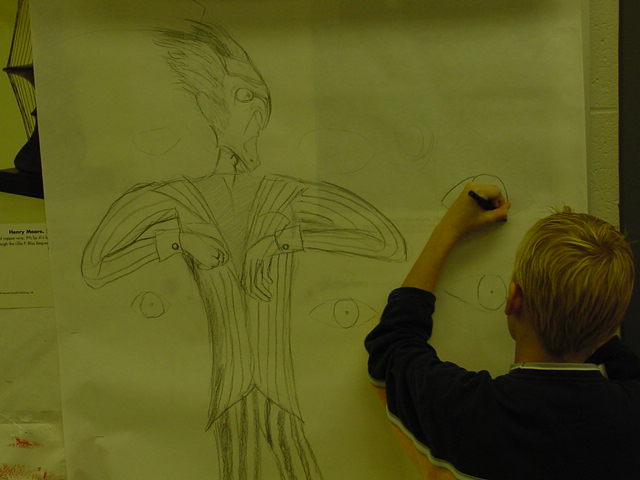
I believe "Count Olaf" was inspired by the "Series of Unfortunate Events" movie. "Johnny" is a gifted draughtsman and specializes in replicating from observation and memorized images. This drawing Johnny did from memory. Posted by Hello

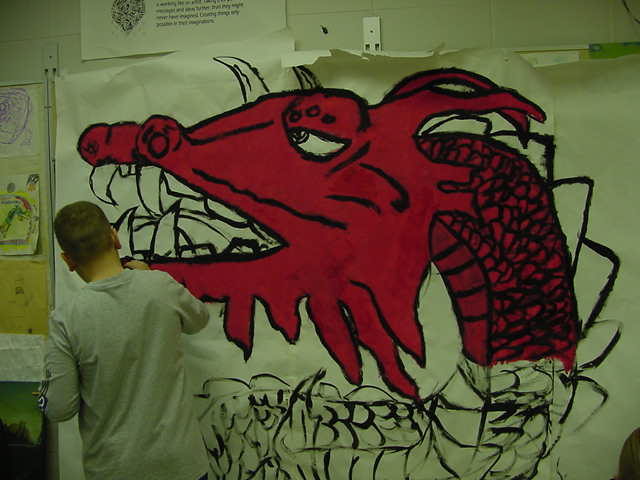
The "Dragon Mural" has become one of the big attractions in the art room lately. Jimmy Shockly (not his real name) asked me for a big piece of mural paper one day and sketched this dragon head from a smaller drawing. After an initial inspired burst of energy and flurry of drawing and painting activity, Jimmy has been slowly building the work up. We have been discussing painting technique, during this time. We have talked about space, transparency, pattern under painting and over painting during this creative experience. I can't wait to see it in it's final stage. Not bad for a 5th grader working with his own ideas about painting.....cg Posted by Hello
Sunday, November 07, 2004

"The Next Big Thing"

Clark and I presented at the IAEA State Conference last Friday. We had a nice group of interested teachers check in with us (20) and listen to our story of how we got to where we are today with our rationale, transition and current program with choice based art education. This was the 5th time Clark and I have done a presentation for either the state or national art education associations but this is the first time our audience members kept us speaking an hour and a half after we were supposed to end our presentation. They were very interested in everything we had to say....and had a lot of questions about our centers, assessment, facilitating and developing creative thinkers, classroom management and everything else we had to say about child centered, choice based art education. Clark and I each created a PowerPoint presentation and then on Thursday before our presentation, we worked everything out, combining the two presentations ...On Friday, Nov. 5th at 4:00PM, we delivered the presentation. I remember our audience was very enthusiastic and several left interested in beginning choice programs of their own. We finished up at around 6:30 PM. I was delighted the choice concept was recieved so positively by the art teachers who came to hear what we had to say about our new programs....Near the end of our talk, one of the teachers came up to me and said, I do a lot of DBAE, but is this the "next big thing?" I thought, "this is bigger than DBAE"....I said to her, "I don't know," but I thought to myself...It very well could be, ...and I think it should be, not just for art education but to a certain degree, for all subject areas....I think about John Dewey's works, "The Child and the Curriculum" and "Democracy And Education" Dewey speaks at great length about adults classifying knowledge, facts and learning away from their original place and away from relevancy to student's life and experience. With choice based art, we can connect directly to student experience....this is what makes this program so potent....and this is why I am so excited...Check back again....cg